
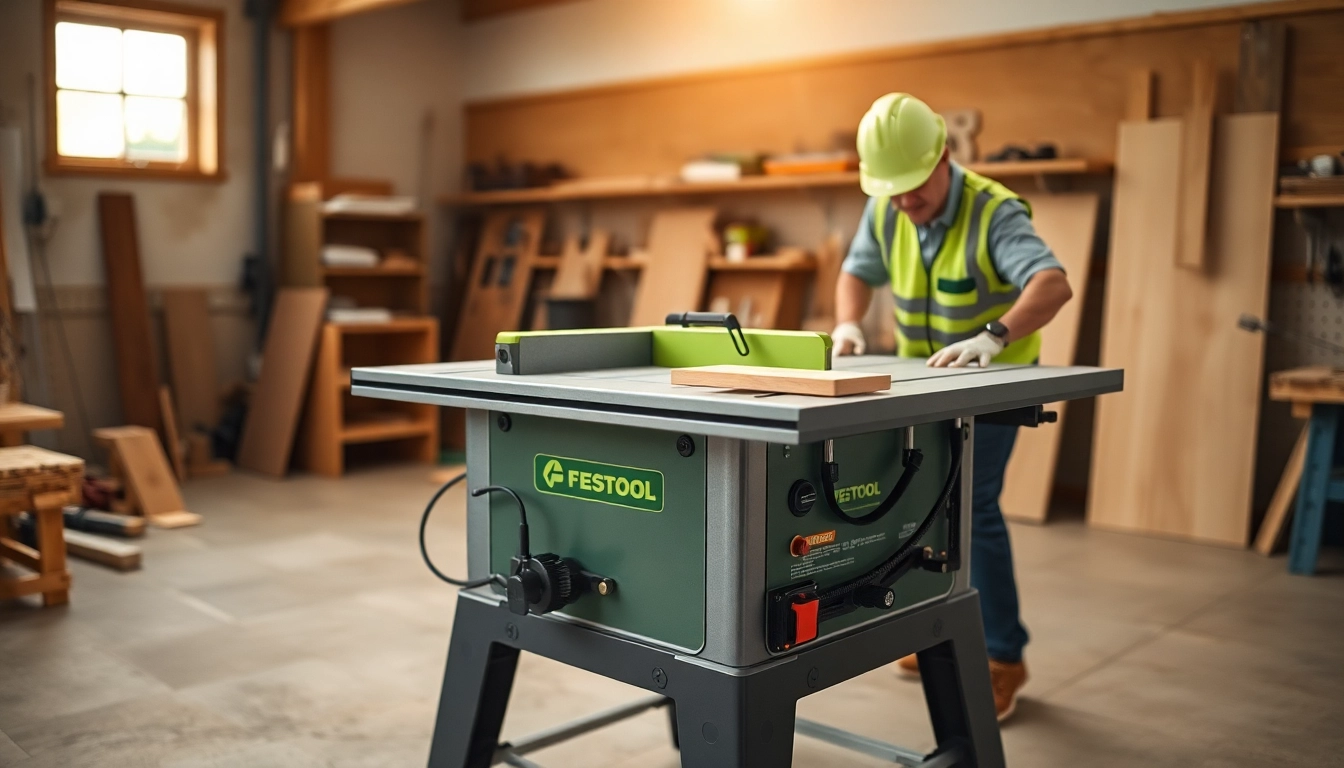
Understanding the Festool Table Saw Components
Key Features of a Festool Table Saw
The festool table saw is not just any power tool; it is a hallmark of precision engineering tailored for serious woodworkers and carpenters. A key feature that sets it apart is the plug-it power system, which allows you to change the power cord in case of damage without impacting tool performance. Additionally, the integrated dust extraction feature significantly reduces airborne particles in your workspace, enhancing safety and visibility.
Another notable aspect is the precise cutting depth and angle adjustment mechanisms. Festool has developed intuitive measurement guides and adjustments, ensuring that even complex cuts are easily repeatable. Moreover, the high-quality components used in these saws—such as their FSK guide rails—emphasize durability and accuracy.
The Importance of Safety Mechanisms
Safety in woodworking is paramount, and Festool understands the risks associated with table saw usage. The festool table saw comes equipped with advanced safety mechanisms, including blade guards and anti-kickback features. The blade guard is adjustable, ensuring maximum coverage for various types of cuts while still allowing a clear view of the cutting area.
Additionally, many models feature a safety switch that prevents accidental activation, along with an overload protection system that shuts the machine down in case of overheating, thus reducing the likelihood of injuries or tool failure.
Choosing the Right Blade for Your Festool Table Saw
Selecting the appropriate blade is critical to achieving clean cuts with your festool table saw. The type of blade you choose depends on the material you are cutting and the specific cut you intend to make—be it crosscuts, rip cuts, or delicate finishing. Festool offers a range of blades optimized for different wood species and applications.
For instance, a fine-toothed blade is ideal for clean crosscuts in hardwoods, while a ripping blade, which has fewer teeth, is designed for cutting along the grain in timber. Understanding the blade characteristics, such as tooth design, hook angle, and kerf thickness, will significantly affect the performance and quality of your cuts.
Essential Techniques for Using the Festool Table Saw
Setup and Calibration Steps
When utilizing a festool table saw, proper setup and calibration are essential for optimal performance. Begin by placing the saw on a stable surface and ensuring that it is level and free from debris. The alignment of the blade with the miter slot is a critical calibration step; an improperly aligned blade can lead to inaccurate cuts.
To achieve accurate blade height adjustments, make sure you’re following the manufacturer’s guidelines for your specific model. Utilize the measuring guides provided to ensure repeatable settings, and always double-check your measurements before making the initial cut. This meticulous approach guarantees precision and professional-grade results.
Safe Operating Procedures
Operating a festool table saw safely requires understanding both the tool’s features and best practices. Always wear personal protective equipment, including safety goggles and ear protection. When making cuts, maintain a proper stance, and ensure that you have a clear path for your arms and hands, avoiding unnecessary risks.
Employing push sticks and other aids is essential for keeping your hands at a safe distance from the blade while maintaining control of your material. Always observe the rotation direction of the blade and ensure that your material is fully supported throughout the cut to prevent binding or kickback.
Common Cutting Techniques
Mastering various cutting techniques with the festool table saw opens up a world of possibilities for your woodworking projects. From rip cuts and crosscuts to more complex operations like bevel cuts and compound angles, each technique requires specific setup and handling.
For rip cuts, feeding the material steadily along the fence ensures a clean edge, while for crosscuts, the use of a crosscut sled or a miter gauge enhances accuracy. Understanding when and how to utilize the saw’s built-in features, such as the sliding table or rotary adjustment, enables you to execute the desired cuts confidently.
Maintenance Tips for Longevity of Your Festool Table Saw
Regular Cleaning and Care
Maintaining your festool table saw through regular cleaning and care is vital for its longevity and performance. After each use, ensure that sawdust and debris are cleared from the table, blades, and dust collection system. This practice not only keeps your workspace tidy but also prevents buildup that can affect operation.
Lubrication of moving parts, particularly the elevation and tilt mechanisms, is crucial. Be sure to consult your user guide for specific lubrication guidance, and always apply the recommended oils to extend the life of these components.
Diagnosing Common Issues
Even the best tools encounter issues over time. Understanding how to diagnose common problems can save you time and trouble. If you notice unusual vibrations or noise, check to see if the blade is properly installed and balanced. Uneven cuts may indicate that the blade is dull or that the alignment is off.
If the saw fails to power on, confirm that it is plugged in securely and check the power source. Regularly inspecting and maintaining the electrical components will help prevent issues from arising.
When to Seek Professional Repairs
While many maintenance tasks can be performed at home, knowing when to seek professional repairs for your festool table saw is crucial. If the tool exhibits persistent problems despite following maintenance recommendations, or if you encounter issues with the motor or electrical components, it is advisable to consult a qualified technician.
Seeking professional help ensures that repairs are done correctly, preserving the tool’s performance and safety features, ultimately extending its operational lifespan.
Advanced Techniques and Projects with the Festool Table Saw
Creating Complex Cuts and Jointing
For skilled woodworkers, the festool table saw opens up the potential for creating complex cuts such as dados, grooves, and even more intricate joinery. These advanced techniques require precise measurements and attention to detail. Using specialized jigs can greatly enhance the accuracy of these cuts.
Jointing, in particular, can be effectively accomplished by using the saw in conjunction with a sled. This method allows for perfectly square edges that are essential for high-quality joints, improving the overall integrity of your projects.
Combining with Other Tools for Enhanced Results
One of the strengths of the festool table saw is its ability to integrate seamlessly with other Festool tools like the router, jigsaw, and track saw. Utilizing a track system enables precision cuts while minimizing error and waste. For example, combining the table saw with a Festool router can provide enhanced detailing and edge finishing.
Additionally, using dust extraction systems in conjunction with other tools provides a clean workspace, which is not only safer but also enhances the overall woodworking experience.
Tips for Custom Projects
When embarking on custom projects with your festool table saw, planning is crucial. Start with detailed drawings and cut lists to ensure that each piece is sized accurately before beginning your work. This level of preparation will reduce waste and streamline the cutting process.
Experimenting with different cuts, finishes, and assembly techniques will yield unique results and increase your skill level with the tool. Documenting your process also allows for future reference, helping to refine your technique over time.
Performance Metrics and FAQs About the Festool Table Saw
Evaluating Cutting Precision
Precision is at the heart of any quality woodworking project, and the festool table saw excels in this area. To ensure cutting precision, routinely check the alignment of the blade and fence. Additionally, utilizing high-quality measuring tools can further enhance your ability to achieve exact cuts.
Conducting test cuts on scrap material is a recommended practice, allowing you to assess the quality and adjust settings as necessary before committing to final pieces.
Measuring Efficiency and Time Saved
Efficiency in the workshop translates to more projects completed in less time, a vital aspect of any professional woodworker’s workflow. The festool table saw is designed for efficiency, with features like quick adjustments and an intuitive interface. Utilizing the connection to Dust Extractors can also save time on cleanup, allowing users to focus more on their craft.
Measuring time saved can be subtle but significant; consider tracking the time spent on setup versus actual cutting, and observe the impact of precision cuts on overall project timelines.
Addressing Performance Concerns
Performance concerns are common, especially with high-powered tools like the festool table saw. Should you notice diminished performance, it’s critical to troubleshoot effectively. Check for common issues: blade dullness, misalignment of components, and dust accumulation in the motor or blade housing.
Regular performance reviews can help identify patterns regarding tool use and any adjustments needed to maintain optimal performance. If issues persist despite troubleshooting, professional evaluations may be warranted to ensure everything is functioning as it should.
In conclusion, the festool table saw represents a pinnacle of woodworking excellence, merging function with precision and safety. By understanding its components, employing proper techniques, and implementing regular maintenance, users can maximize their experience and achieve professional results in their woodworking endeavors. For more tools and accessories to complement your woodworking needs, consider checking out Mistrer Worker for the latest offerings.